| Author |
Message |
 TerybleVeteran Member TerybleVeteran Member
Posts: 316
Joined: 17 Apr 2008
|
|
 Posted: Sun Apr 20, 2008 1:50 pm Posted: Sun Apr 20, 2008 1:50 pm |
 |
|
|
|
|
|
|
 |
 KurtSSenior Member KurtSSenior Member
Posts: 875
Joined: 15 Feb 2008
|
|
| Posted: Sun Apr 20, 2008 2:11 pm |
|
|
From the links you provided, I cannot view anything more than a thumbnail w/o Snapfish registration. 
Perhaps there's a way to include the image with the
| Code: |
| [img]url of image without server scripts?[/img] |
|
|
|
|
|
|
 eagamesExpert Member eagamesExpert Member
Posts: 3013
Joined: 15 Nov 2005
|
|
| Posted: Sun Apr 20, 2008 2:42 pm |
|
|
The 55 cents with minor strike doubling (poormans) aren't doubled dies and are not stages of the real 1955 doubled dies.
Realy they have no extra value but some people pay a few bucks for them.
Doubled die coins are made from dies that have doubled images so every coin made from the die has the same spread of doubling and nothing changes except the die state as they used the die.
The 1955 doubled die-002 (1DO-002) looks similar to the poormans coins but it is a real doubled die. That's worth looking for among the "poormans" because sometimes people don't know what they are and they have good value. The other ones like 1DO-003 and 1DO-004 are also doubled dies but pretty minor.

http://coppercoins.com/lincoln/dietype.php?date=1955&die_mint=p&die_type=do&page=0
_________________
Ed
|
|
|
|
|
|
TerybleVeteran Member
Posts: 316
Joined: 17 Apr 2008
|
|
| Posted: Sun Apr 20, 2008 3:03 pm |
|
|
So besides being called the "poormans". Is there a term used for what happened here? Something did happen here, didn't it? The metal beside the last 5 is kinda pushed up?
How do you post without the URL?
Thanks to you both for responding.
T
|
|
|
|
|
|
 Bob PSite Admin Bob PSite Admin
Posts: 3482
Joined: 01 Jul 2003
Location: Niceville, Florida
|
|
| Posted: Sun Apr 20, 2008 3:24 pm |
|
|
Theresa,
Die deterioration is what causes the effect you see. This is also common in other years such as 1953. Seems to be pretty commmon in the 50's.
_________________
Bob Piazza
Site Admin/Moderator
Attributer/Photographer
bobp@coppercoins.com
mustbebob1@gmail.com
|
|
|
|
|
|
eagamesExpert Member
Posts: 3013
Joined: 15 Nov 2005
|
|
| Posted: Sun Apr 20, 2008 3:33 pm |
|
|
Most of the poormans just have minor doubling on the second 5.
It's either from a worn die or eroded die or minor strike doubling, machine doubling, ejection doubling, damaged die or damaged coin or something was loose in the setup.
The key thing is the die itself (on the poormans) was normal and also could make normal coins.
The doubled die coins are not like that, the reason they are called doubled dies is because the die itself has a double image "doubled die" so they are made with a single strike but the image is double because the die had a double image.
Hope that makes sense, as you read the forum you will see that many posts are coins that look doubled and people want to know if they are real doubled dies or something else. If you read lot's of post's you will see how to tell them apart. Some are very tricky to be sure of so it's good to post a pic and get opinions before you toss it aside.
Hope that helps
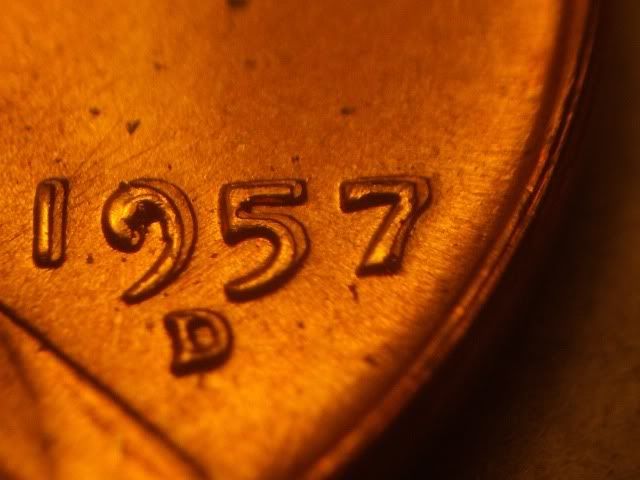
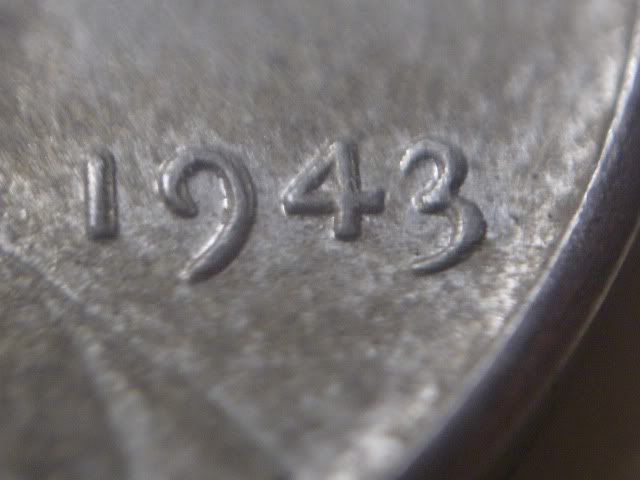
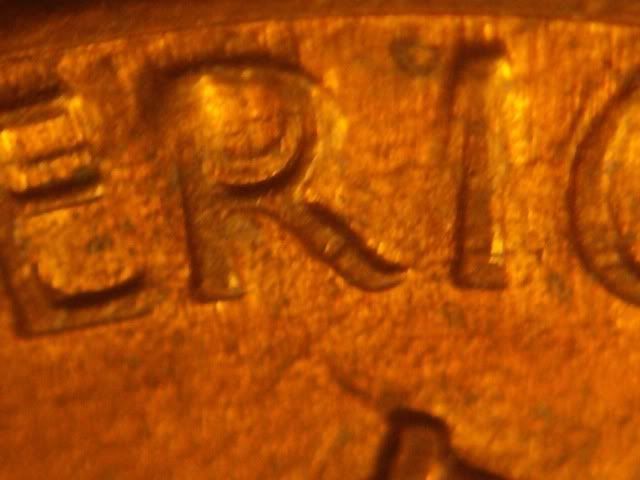
Here's a few coins with strike doubling that look neat but are not doubled dies and not much value:
Machine or strike doubling:
Probably from die erosion:
_________________
Ed
|
|
|
|
|
|
KurtSSenior Member
Posts: 875
Joined: 15 Feb 2008
|
|
| Posted: Sun Apr 20, 2008 3:45 pm |
|
|
Very nice example of MD on the '57! That's probably one of the better examples I've seen of diagnosing this form of damage. The shearing is very severe and that low-relief steplike "doubling" is classic. I wish I had such an instructive pic when I began searching for DDOs. 
|
|
|
|
|
|
eagamesExpert Member
Posts: 3013
Joined: 15 Nov 2005
|
|
| Posted: Sun Apr 20, 2008 4:07 pm |
|
|
Hey Kurt,
Yes I think it's a good example. The reason for me is you can see on that 57-d that the second image took metal away from the first image. That is sort of an  of how to tell they are not doubled dies. Doubled dies are a second image added to the first image not smashed on top of the first image and if you look at the 57-d you can see where the first image narrows where that second hit mashed into it. of how to tell they are not doubled dies. Doubled dies are a second image added to the first image not smashed on top of the first image and if you look at the 57-d you can see where the first image narrows where that second hit mashed into it.
I've also seen people post possible RPMs (that were not RPMs) and they actualy said in their post "the second mintmark is on the first one" which is a giveaway that it was not an RPM because the same thing holds true, a real RPM adds a mintmark but it is not on top of the primary mintmark so if it is it's not a real RPM LOL.
By the way I've seen similar 57-D cents on ebay with titles like "massive doubled die" and people bid them way up! I always wish they would just list them as what they are and someone might want them anyway as what they are but not as doubled dies.
_________________
Ed
|
|
|
|
|
|
TerybleVeteran Member
Posts: 316
Joined: 17 Apr 2008
|
|
| Posted: Sun Apr 20, 2008 5:33 pm |
|
|
Thank you, I think I understand now. I have alot of coins with the D mint mark especially.
So this would be a poor man's error because it was the die that made it that way, after there was damage to the die? Right... In other words die error (even though minor), not variety.
Thanks for your patience, I'm still learning
T
|
|
|
|
|
|
eagamesExpert Member
Posts: 3013
Joined: 15 Nov 2005
|
|
| Posted: Sun Apr 20, 2008 5:55 pm |
|
|
| Quote: |
| In other words die error (even though minor), not variety. |
I think you got it.
For the most part varieties were on the die when the die was new and every coin will be the given variety.
Errors happen when the coin is struck, die varieties happened when the die was made.
There are some coins that don't follow this rule.
For example people call 3 leg buffalos a variety but the die started life with 4 legs then one was polished off. The 1922 plain cent started life with a D but it was filled in or polished away but it is often called a variety. I'd say they are more a worn out die state but people still call them variety.
Another thing that clarifies this is if people say a "die variety" I'd assume the die was made with it.
_________________
Ed
|
|
|
|
|
|
 DickExpert Member DickExpert Member
Posts: 5780
Joined: 21 Sep 2006
Location: Rialto, CA.
|
|
| Posted: Sun Apr 20, 2008 10:16 pm |
|
|
Bob, coop grought out a question That I have had for some tome, but never took time to ask about. Coop sent me an email with a grid, showing the differenf views of the RPM's, primarily, and the different classifications, I.E. D?D-N, S/S/S/S-N, etc, etc. Now my question is this: How do you tell the direction of the "TILT" if one dows not have the coin in hand? As Coop shows, there are several that are "tilted"-rotated CW, or CCW. THe visual indications are always like the rotation CW, or CCW, while the tilt has to deal with "to", "from", "Right", or "left". This might make more sense if Coop were to send you the grid he made. I believe it would clarify a lot of confusion for the new-comers.
Dick
_________________
" Deja Moo: The feeling that you've heard this bull before".
|
|
|
|
|
|
 coopExpert Member coopExpert Member
Posts: 3402
Joined: 17 Sep 2003
Location: Arizona
|
|
| Posted: Mon Apr 21, 2008 2:58 pm |
|
|
I still have to add something to it and will post it when its ready. It needs a little tweaking yet.
_________________
Richard S. Cooper
You may be only one person in the world, but you may also be the world to one person.
|
|
|
|
|
|
|


