| Author |
Message |
 mojaveblueAdvanced Member mojaveblueAdvanced Member
Posts: 143
Joined: 02 May 2010
Location: Southern Cal
|
|
 Posted: Sat Jan 29, 2011 2:09 pm Posted: Sat Jan 29, 2011 2:09 pm |
 |
|
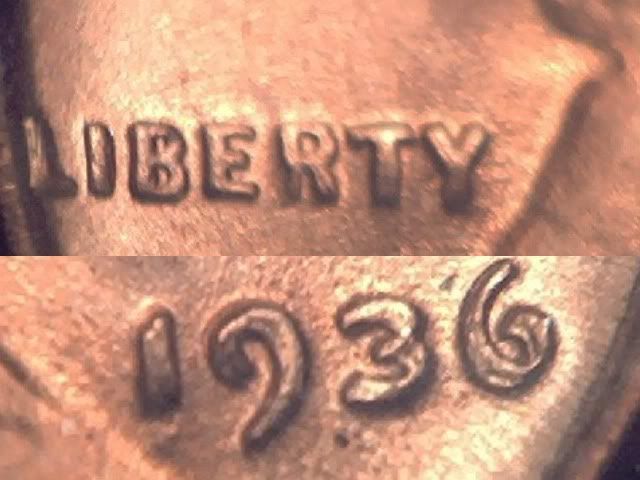
In CD's book, Looking thru Lincoln Cents, he says there is an unusual effect on 1936 cents, that the R in Liberty is broken, on one of the hubbing sequences.
This cent caught my eye because of this, Im sure it's post mint damage, but what a coincidence, and it looks like there wasn't any damage into the level of the field surrounding the R.
[img]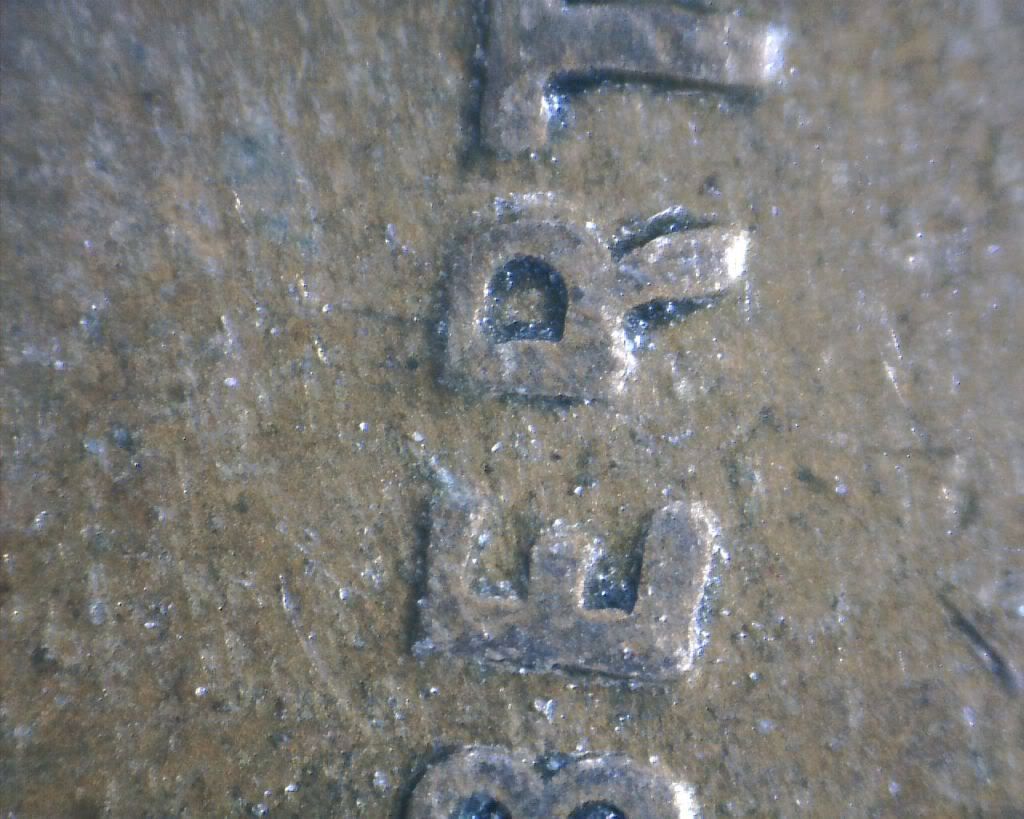
[/img]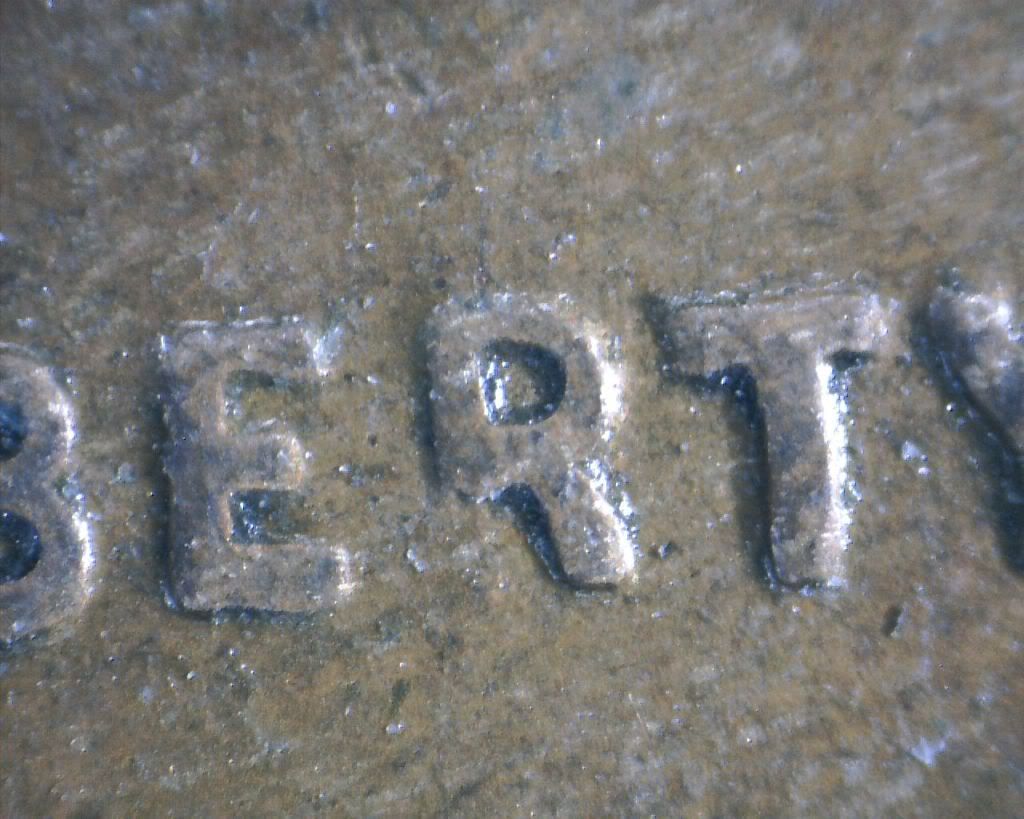
|
|
|
|
|
 |
 eagamesExpert Member eagamesExpert Member
Posts: 3013
Joined: 15 Nov 2005
|
|
| Posted: Sat Jan 29, 2011 4:33 pm |
|
|
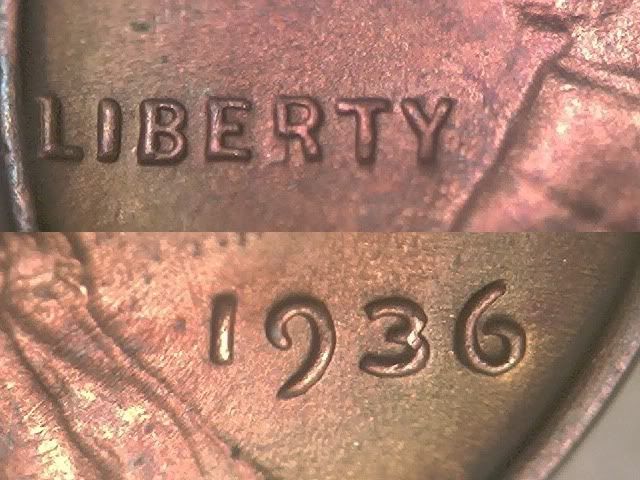
Your coin is not post mint damage. It's missing the leg because it's die was hubbed with a the hub with a broken leg.
They had a hub that was damaged on the R. They made some dies with it and they have the missing leg. They aren't doubled dies but they are neat.
They were made by the same hub as the 3 big 1936 DDOs but on those 3 big DDOs they were hubbed by this broken hub and by a non broken hub.
Here's another:
_________________
Ed
|
|
|
|
|
|
 DickExpert Member DickExpert Member
Posts: 5780
Joined: 21 Sep 2006
Location: Rialto, CA.
|
|
| Posted: Sat Jan 29, 2011 10:30 pm |
|
|
I agree. They are NOT post mint damage. i have several of them, some with more left on the leg, but NONE are DDO's.
_________________
" Deja Moo: The feeling that you've heard this bull before".
|
|
|
|
|
|
mojaveblueAdvanced Member
Posts: 143
Joined: 02 May 2010
Location: Southern Cal
|
|
| Posted: Tue Feb 01, 2011 2:34 pm |
|
|
Ok, that is great, I mean it seems a good one to hang onto.
I hadn't thought about the possibility of "clean" strikes with the die that was made from the damaged hub. I kinda thought you'd only see the effect on the DO.
Thanks guys.
|
|
|
|
|
|
wavysteps2003Expert Member
Posts: 1344
Joined: 25 Feb 2005
|
|
| Posted: Tue Feb 01, 2011 8:49 pm |
|
|
To complete the story. You can have three versions of this R in LIBERTY. The full leg, which was hubbed with a complete "R", a semi-complete "R" with a partial leg, which was hubbed with a hub that had a complete "R" and then hubbed with the hub that had a broken "R" and then the working die that has no leg which was hubbed twice with the broken "R" hub.
The three major doubled die obverses were hubbed with a complete "R" hub and then the broken "R: hub.
BJ Neff
_________________
Member of: Coppercoins, ANA, CFCC (VP), CONECA, FUN, NCADD (Editor), NLG, LCR, traildies.com. and MADdieclashes.com
The opinions that I express do not necessarily reflect the policies of the organizations that I am a member of.
|
|
|
|
|
|
mojaveblueAdvanced Member
Posts: 143
Joined: 02 May 2010
Location: Southern Cal
|
|
| Posted: Thu Feb 03, 2011 10:17 am |
|
|
Ok, I gotta write that down and think about the mechanics of it. I'm considering putting a poster on the wall behind my monitor at home to remind me the relationship between the devices on a hub vrs the die vrs the coin.
There are things that might be easy for some people but that just don't stick for me.
Thanks BJ
|
|
|
|
|
|
eagamesExpert Member
Posts: 3013
Joined: 15 Nov 2005
|
|
| Posted: Thu Feb 03, 2011 4:26 pm |
|
|
This is DDO die-2. Notice the leg over the missing leg with some spread:
_________________
Ed
|
|
|
|
|
|
 jonMember jonMember
Posts: 64
Joined: 04 Feb 2011
|
|
| Posted: Tue Mar 08, 2011 9:02 pm |
|
|
|
Eagames, Do you mean that this coin was struck with 2 different dies? One with the broken leg of the "R" and one without?
|
|
|
|
|
|
eagamesExpert Member
Posts: 3013
Joined: 15 Nov 2005
|
|
| Posted: Tue Mar 08, 2011 11:12 pm |
|
|
Jon,
They are only struck by one die.
What it means is that when they made that die (negative that strikes the coins) they used a hub (positive that makes the die) that had the broken R and they used a hub without the broken R so the die shows the broken and not broken leg and all the coins made from that die look like that.
Most or all dies need more than one hubbing to be made.
(my guess) At some point the leg on the R on the hub broke. They made some dies with a broken keg.
At some point they got a new hub.
Either for a while they used the old broken hub and the new hub or maybe they had several dies being made that had been hubbed by the broken hub then gave them the second hubbing with the new hub. There are at least 3 1936 doubled dies that were hubbed by the broken hub and a normal hub.
_________________
Ed
|
|
|
|
|
|
jonMember
Posts: 64
Joined: 04 Feb 2011
|
|
| Posted: Wed Mar 09, 2011 5:49 am |
|
|
Mojave, That's a really interesting coin. There's such a fine line between a filled die and a broken die.
Ed, Your pics and explanation Really helped me to understand a part of the minting process that I had never grasped before. Thank You Much !!!
P.S. I know next to nothing about minting but love the varieties and errors. It's still a puzzle to me how most of them occur.
|
|
|
|
|
|
DickExpert Member
Posts: 5780
Joined: 21 Sep 2006
Location: Rialto, CA.
|
|
| Posted: Wed Mar 09, 2011 12:55 pm |
|
|
Phil, (mojaveblue), and jon, there is a book that explains all this, in great detail. But, it is in different terms, than those which we use here. that makes it doubly confusing, but it is worth checking into,if you ever get into Canadaian, coins. They use "hubs, matrixes, and punches.
The reason I bring this into the picture is because the "Hierarchy" of dies is very involved, and back then, the dies, or matrixes were hand-engraved, according to end result for the design.
It is the "genealogy of the coinage".
If we had made changes to the portrait of Abe, as it was done over the years, and also made the changes , "varieties", then we would have a LOT more than just the varieties we know, presently. For instance: If we had made three changes to Abe's profile during one year,,and were in the habit of converting these changes into the mintage run during that year, we would have a coin with three obverses, and one reverse, for that date, assuming the reverse was not changed.
_________________
" Deja Moo: The feeling that you've heard this bull before".
|
|
|
|
|
|
|


